
Inve Learning Series
CWIP and the Capex Trap: Projects That Never Earn
What CWIP means and how to spot the capex trap: big projects that swell the balance sheet but never earn their interest. A real Indian case, read line by line.
By Inve Research Desk · 22 June 2026 · Updated 14 July 2026
Published by Inve Research Desk
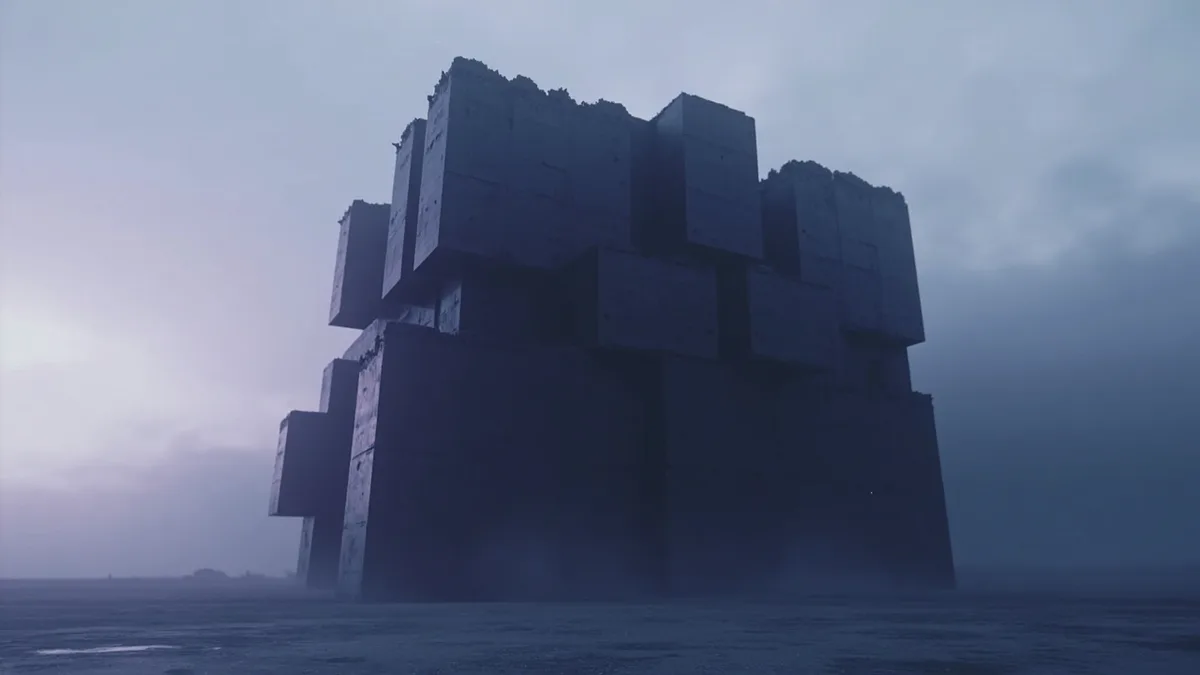
A few years ago I drove past a half-built factory on the edge of a small town in Maharashtra. Steel frame up, walls part-done, a faded board promising jobs. Cranes idle. It had looked exactly like that for three years. The owner had borrowed to build it, the interest clock was ticking, and the building made nothing — not a single unit, not a single rupee. It just sat there, eating cash and aging in the rain.
A company can do the same thing on a giant scale, and the balance sheet will quietly tell you — if you know the one line to read. That line is CWIP.
What CWIP is, and why it can fool you
CWIP stands for capital work in progress — the money a company has already spent building an asset (a plant, a power station, a port) that isn't finished and so isn't earning yet. It sits on the balance sheet under assets, right next to fixed assets (the plants and machines that are finished and running).
Here's the catch. Both lines make the company look bigger. Total assets go up. The story gets grander — "we're building three new plants." But a fixed asset is a worker; CWIP is a worker you're paying who hasn't shown up yet. One earns. The other just costs — especially if it was built with borrowed money, because the interest comes due whether the plant runs or not.
The trap, then, is simple to state and brutal in practice: capex that swells the balance sheet but never produces a return. The half-built factory that never opens — or opens and still earns almost nothing.
"The worst sort of business is one that grows rapidly, requires significant capital to engender the growth, and then earns little or no money." — Warren Buffett, 2007 Berkshire Hathaway shareholder letter
A real one, read line by line: Reliance Power
Let me show you the trap in a company you've heard of. (This is an example to learn the skill from — not a view on whether to buy or sell it.)
In January 2008, Reliance Power ran the biggest IPO India had ever seen. Shares were issued at ₹450 each. On listing day, 11 February 2008, the stock closed about 17% below that issue price (Reliance Power, Wikipedia). The pitch was pure capex-as-growth: a clutch of giant power projects, including a 4,000 MW "ultra mega" plant at Tilaiya in Jharkhand. Investors didn't buy earnings — there were barely any. They bought the promise of plants.
Now watch the balance sheet do what that half-built factory did, but in thousands of crores.
In FY14, Reliance Power's books carried ₹32,255 crore of CWIP against just ₹13,839 crore of finished, running fixed assets (Inve data, 2026). Read that ratio slowly: more than twice as much money tied up in things not yet earning as in things that were. The company was, in balance-sheet terms, mostly a building site.
Years passed. The building sites turned into plants — by FY25, fixed assets stood at ₹31,859 crore and CWIP had shrunk to ₹1,387 crore (Inve data, 2026). The capex got done. So the obvious question for an owner is: now that the plants are built and running, what do they earn?
The test that exposes the trap: does the asset out-earn its interest?
Here is the number that mattered the whole time. In FY25, those ₹31,859 crore of plants threw off ₹2,109 crore of operating profit — the cash the business made from running. In the same year, the company paid ₹2,056 crore in interest on its borrowings (Inve data, 2026).
Put those two side by side. The plants earned ₹2,109 crore; the lenders took ₹2,056 crore. Interest coverage of barely 1.03 times — meaning almost every rupee the assets produced went straight to the bank, leaving next to nothing for the people who actually own the company. That is the trap, fully sprung: the capex got built, and it still doesn't earn enough to pay for itself and leave the owner a profit.
You can see it in what owners actually received. Net profit was negative ₹403 crore in FY23 and negative ₹2,069 crore in FY24 (Inve data, 2026) — losses, in years when the plants were up and running. The net worth (the owners' stake) fell from about ₹20,632 crore in FY15 to ₹11,614 crore in FY24 (Inve data, 2026). Nearly half the owners' money, gone, while the assets sat there looking impressive.
The Tilaiya project — the headline plant — was never built at all. Reliance Power exited it in 2015, citing delays in getting the land, and later sold its remaining interest in the project (Reliance Power, Wikipedia). The grandest "asset" in the 2008 pitch produced exactly zero kilowatt-hours and zero rupees. A board promising jobs, and idle cranes.
Test yourself
1/3. What does CWIP (capital work in progress) represent on a balance sheet?
2/3. A company's plants earn ₹2,109 crore of operating profit and it pays ₹2,056 crore in interest. What does that tell an owner?
3/3. Why can heavy capex make a company look better than it is?
How to check this on any company in ten minutes
You don't need a model. You need four lines from the financials and one habit of mind.
- Look at CWIP versus fixed assets, over a few years. A little CWIP is normal — every growing company is always building something. The warning is CWIP that is large relative to running assets and stays large year after year. That's a project that won't finish, or won't switch on.
- When CWIP finally becomes a fixed asset, watch what operating profit does next. If the capex was real, profit should step up a year or two later. If profit stays flat while assets balloon, the capex didn't earn its keep.
- Run the interest test. Operating profit ÷ interest. Below ~2x for a debt-funded company, ask hard questions; near 1x, the assets are working for the bank, not for you. (This is the cousin of the return-on-capital question — the single most important quality number in this series.)
- Ask what the owner got. Did net worth grow? Was there ever a dividend? If the assets are vast and the owners' stake keeps shrinking, you have your answer.
There's a forward-looking version of this too. Heavy capex is usually announced and re-announced on earnings calls — "the new plant will commission by Q3, margins will expand from FY27." Those are commitments you can hold management to, quarter after quarter. The slow, unglamorous work is checking whether the plant that was "six months away" three years running ever actually arrives. (Tracking that kind of guidance across a 10–15 stock portfolio, call after call, is exactly the manual grind Inve's Promise Tracker is built to take off your plate.)
See it on a live earnings call
Browse AI-analysed concall summaries — guidance tables, graded Q&A, and the quotes behind them — for 1,500+ listed Indian companies.
Browse concall summariesThe owner's question
Capex isn't bad. The plants you depend on — power, cement, steel, ports — all began as someone's CWIP, and the great compounders are great precisely because their capex earns far more than it cost. The skill isn't to fear big projects. It's to refuse to confuse building with earning.
So before you're impressed by a company "investing for the future," ask the half-built-factory question: when the cranes finally leave and the plant switches on, will it earn more than the interest on what it cost to build — and leave something over for me? If the balance sheet has been swelling for years and the answer is still no, you're not looking at growth. You're looking at a board that promises jobs, in front of cranes that never move.
Frequently asked questions
No. Every growing company carries some CWIP — it's just the cost of projects still under construction. The flag goes up when CWIP is large relative to the assets already running and stays large for years, or when projects keep getting delayed. Healthy capex turns into fixed assets and then into higher profits within a year or two. Capex that never does that is the trap.
Watch operating profit in the years after CWIP converts to fixed assets, and compare operating profit to interest paid. If a company finished big plants but operating profit barely covers its interest (coverage near 1x), the assets are earning for the lenders, not the owners. Falling net worth and no dividends, despite a growing asset base, confirm it.
Trace the incentives. Growth and "asset creation" make a company look big and ambitious, which can flatter management even when returns are poor. Borrowed money funds the building, so the cost is deferred and easy to under-state in a pitch. This is why an owner judges capex by the return it eventually produces — not by the size of the announcement.
It's most visible there because the projects are huge and slow, but the logic is universal. Any business — a hotel chain, a manufacturer, a retailer opening stores — can pour capital into assets that never earn an adequate return. The four-line check (CWIP vs fixed assets, profit after completion, interest coverage, what the owner got) works on all of them.